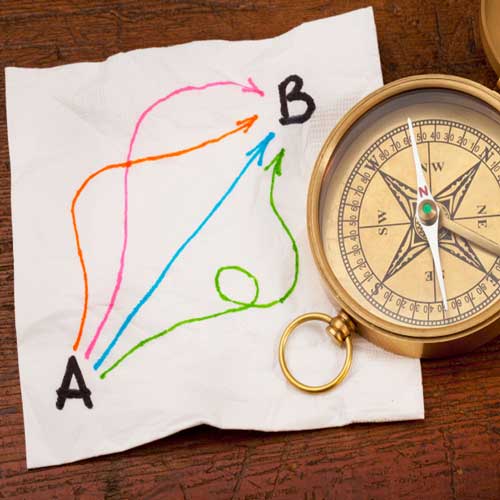


Telling children, “Be nice!” can have unexpected consequences.
You probably know that the non-specific command, “Be nice!” is not particularly helpful for children. But worse than that, it can result in the opposite behavior. Here’s how:
When “Be nice!” is spoken in a corrective or threatening tone, as in “Be nice [or else]!” kids hear it as, “Do whatever it takes to keep the peace.” Without conflict resolution skills, kids naturally think that means, “Give up what you want,” or worse, “Give up wanting what you want.” Ouch!
Giving up what you want, or giving up wanting what you want, is definitely not the route to a win-win solution. In fact, when kids decide that being nice requires them to give up what they want, a permanent association can be formed: “being nice=giving up what you want.”
When that happens, instead of “being nice” generating feelings of joy and well-being, “being nice” can translate directly into “giving up what you want” which generates an instant and sudden feeling of anxiety and powerlessness.
The natural response to a power drop is a power move.
That’s why some kids respond to the command, “Be nice!” by hitting. Even though we don’t like hitting, hitting is a big, strong action that meets the need for power…for the moment. If overtly aggressive actions are replaced by suppression, passive-aggressive actions are what is left in order to meet the need for power.
One passive-aggressive action that might surprise you is “acting nice” when you’d rather punch somebody. This type of contradictory behavior is sometimes referred to as acting like a “door mat” or “letting people walk all over you.” How can that possibly meet your need for power?
One big way is that when you act nice, the other person often looks worse by comparison, at least in your mind, which is where it counts. The elevated sense of self that occurs when you think, “I’m a better person than you,” makes it a psychological power move instead of a physical one. Like its physical counterpart, it meets the need for power…for the moment, but it does not help you achieve a win-win solution.
In fact the greater your need for power, the worse the other person has to appear to you. Without understanding your role in the process, you can easily find yourself dating, living or working with a host of villains! If “being nice” becomes your primary way to meet your need for power, not only will you create villains, but you will be drawn to people who already believe they are!
Whether your power moves are physical or psychological, trying to change your reactions without addressing the source is basically treating the symptoms. Identifying the thoughts behind your reactions puts you on the road to a permanent solution.
Changing your thoughts changes your reactions effortlessly.
Since all growth is through acceptance, changing your thoughts begins by acknowledging that your need for power is real, but the thoughts behind it are not. The thought (permanent association), “being nice=giving up what you want,” actually becomes less permanent the moment you discover you’ve put two separate things together – an abstract concept like “being” with a concrete physical action like “giving up.”
To see if you have this permanent association in place, you can use brain logic:
If “being nice=giving up what you want,” then “giving up what you want=being nice.”
Now try the opposite:
Does “being mean=getting what you want”? If so, then “getting what you want=being mean.”
See anything in that? If so, double ouch, because that last association can create an invisible resistance to receiving!!
To break permanent associations apart, validate why you would think what you think.
For example, “being nice” could easily have been defined for you in childhood as “giving up what you want,” if it happened once. And giving up what you want is certainly one way to be nice…if it is really OK with you.
Here’s one way it could be OK with you: if giving up what you want in the short term, like half of your sandwich at lunch, gets you something you want in the long term, like friendship, then that’s you acting in alignment with who you really are — a nice person! Self-expression always brings peace and joy.
Also validate how the opposite is true for you, and look for patterns. Was “being mean” defined as “getting what you want?” Does getting what you want feel uncomfortable or mean? It could, if getting what you want got associated with taking something away from another person. When did that happen? Does it always happen? Does it have to happen? Are there moments where getting what you want could get everyone what they want?
Questions like that will start to arise naturally when you validate your thoughts because that’s you bringing adult logic to associations created by your childhood brain. Finding counter-proof puts cracks in your old brain logic and helps you see that while your associations were true at least once, they are actually nothing more than important, singular moments from childhood that you needed to remember. After all, when an adult threatens you with, “Be nice or else!” and you have no experience with win-win solutions, you really do need to give up what you want or face dire consequences!
Please let me know if this post spoke to you. And if you want any help breaking apart your permanent associations, or coming up with win-win solutions, please contact me for private coaching.