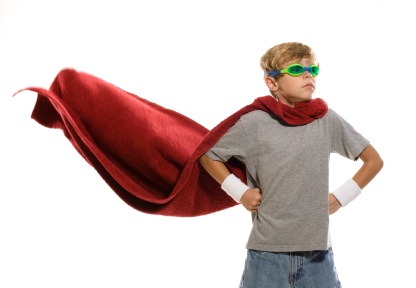
Even big kids get picked on.
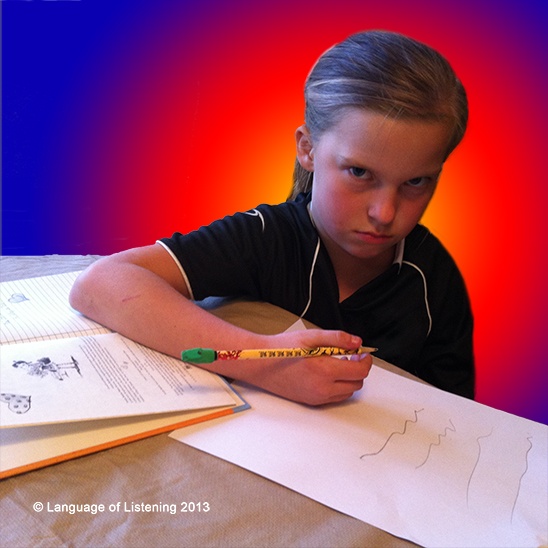
A 10-year old boy recently told me about his embarrassment when a smaller boy threw something and hit him. At first he said, “Stop that! It hurts!” But when another boy said, “That shouldn’t hurt you. He’s smaller than you!” he didn’t know what to do except walk away. As expected, they laughed and called him names.
What can you tell a child that will help him handle future encounters like that? Advice like, “You need to stand up for yourself!” sounds good, but the problem is, he already tried that, and it didn’t work. After all, he said, “Stop that!”
Although he stood up to the child, what he wasn’t able to do was stand up against the status quo. When the other kids (or in this case, one other kid) challenged him, he deferred to their “macho” view that it’s not OK to admit something hurts, even if it does, especially if it is dished out by a smaller person. The bigger you are the tougher you are supposed to be…or the better you are supposed to be at hiding that you are not.
Changing the status quo isn’t easy, but at age 10 it can still be done. What it takes is self-confidence. For example, you or I wouldn’t have a problem standing our ground and saying, “Size has nothing to do with it. If something hurts, it hurts. Must be some other way you can play.” So how do we impart that kind of bully-proofing to our children?
Although advice like “Stand up for yourself,” is good, it also sends the message that the child either doesn’t do it at all or doesn’t do it right. That leads kids to question themselves. Kids’ answers to “What’s wrong with me?” are never good.
SAYing WHAT YOU SEE and adding a STRENGTH sends the opposite message because it proves to kids that the STRENGTH is already there. So in a case like this, when the STRENGTHs are hidden, how do you find them? The clues show up when you SAY WHAT YOU SEE:
“You refused to pretend something didn’t hurt when it did; even at the cost of being ostracized!” Immediately a STRENGTH like “authenticity” comes to mind.
In the face of kids pretending something doesn’t hurt even though they all know it does, a child with a strong commitment to authenticity could turn the tide. Leadership is not hard when it’s grounded in the truth. That’s what adult’s bring to the playground. When kids know we are right, they follow, relieved that we cleared the way for them to be more authentically themselves.
I’ve seen kids do this, too. Eva’s son was the kid in his group who brought a level head to risky activities. He had no trouble saying, “That’s too dangerous. I’m not doing that,” and found kids lining up on his side in agreement.
That’s really who this boy is. If he knew it, he could stand his ground; or if he chose to walk away, others would follow. He could be the leader who inspires other kids to be more real and see pain for what it is, not weakness. He could change the status quo, not let it change him.
Parents and teachers can plant the seeds for children like this to see themselves in new ways. Have you found hidden strengths in your child? Is there a situation you’re facing where you would like to? Please share it with us here!